
Robotic Hysterectomy Recovery: Week by Week
Recovery from robotic hysterectomy week by week: pain, lifting, wounds, driving, flying home safely, warning signs and questions to ask before you travel.
- 12 sections
- 7 questions answered
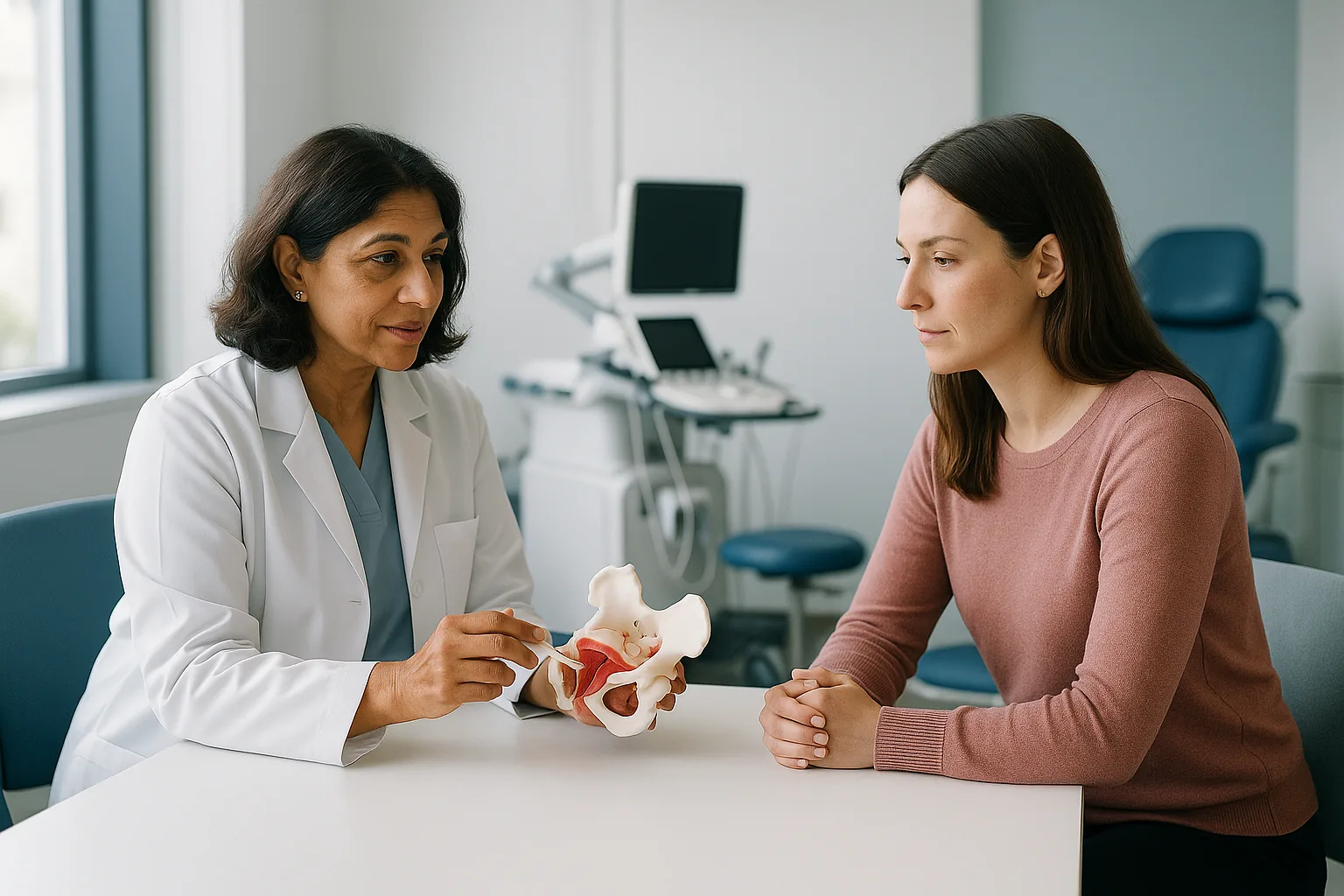
What recovery from a robotic hysterectomy actually involves
A robotic hysterectomy removes the uterus through several small abdominal incisions rather than one large cut, so most of the recovery happens at home rather than in hospital. The operation itself usually takes two to four hours under general anaesthesia, and most people stay in hospital for the same day to one night. The published recovery time is four to six weeks, which is the period most people need before returning to full activity, including lifting. Internally, the top of the vagina (the vaginal cuff) is stitched closed and needs time to heal, which is why some restrictions last longer than the small wounds on the skin suggest. You can read more about the operation itself on the robotic hysterectomy procedure page.
The timeline below describes what usually happens. Recovery varies with the reason for surgery, whether the ovaries or lymph nodes were also removed, your age and your general health. Your surgeon’s instructions always take precedence over any general timeline. If anything on this page differs from what your operating team tells you, follow your team.
Recovery timeline
The first 48 hours
- Pain: Expect soreness around the incisions, cramping low in the pelvis, and often shoulder-tip pain from the gas used to inflate the abdomen. This is controlled with regular paracetamol, an anti-inflammatory if your team approves one, and a short course of stronger tablets if needed. Pain is usually moderate rather than severe.
- Moving: You will be helped to sit up and walk short distances within hours of surgery. Walking helps the gas disperse, reduces clot risk and gets the bowel moving. Avoid lifting anything heavier than a small bag.
- Wounds: The small incisions are usually covered with adhesive dressings or skin glue. Leave them in place unless told otherwise. A little bruising around the incisions is normal.
- Eating and drinking: Sips of water first, then light food as soon as you feel ready. Bloating and nausea are common in the first day.
- Washing: A wash at the basin is usually all that is practical on day one; ask before showering.
- Sleeping: Sleep on your back or side with pillows under your knees or between them if your abdomen feels tight.
- Bleeding: Light vaginal bleeding or brownish discharge is expected. Use sanitary pads, not tampons.
- Driving: Not permitted. You will need someone to take you from hospital to your accommodation.
Week 1
- Pain: Most people move from stronger tablets to paracetamol alone during this week. Cramping and shoulder pain usually settle within a few days.
- Moving and lifting: Walk several times a day, gradually increasing the distance. Avoid lifting anything heavier than a kettle or a small child, and avoid vacuuming, carrying suitcases and pushing trolleys. Ask for help with luggage and household tasks.
- Wounds: Dressings usually come off within a few days, as instructed. Stitches are commonly dissolvable. Keep the incisions clean and dry, and check daily for redness, discharge or warmth.
- Eating and drinking: Return to a normal diet. Constipation is common after pelvic surgery and pain medicine; drink plenty of fluids, eat fibre, and take any laxative your team recommends so you do not strain.
- Washing: Showering is usually allowed once dressings are removed or if they are waterproof. Pat the incisions dry. Avoid baths, swimming and soaking until your team confirms the wounds are sealed.
- Sleeping: Tiredness is normal and rest is part of healing. Sleep in whatever position is comfortable; getting in and out of bed by rolling onto your side first reduces strain on the abdomen.
- Driving: Usually not this week. You should not drive while taking sedating pain medicine or until you can perform an emergency stop without hesitation.
- Work: Most people are not yet back at work, though light computer work from home may be possible towards the end of the week if you feel ready.
Week 2
- Pain: Usually mild and intermittent. Some people need occasional paracetamol, particularly after more activity.
- Moving and lifting: Longer walks are encouraged. Continue to avoid heavy lifting and anything that makes you strain or hold your breath. Light household tasks are usually fine.
- Wounds: Incisions are usually closed and drying. Itching is normal; scratching is not. Dissolvable stitches may still be visible.
- Eating and drinking: Normal diet. Keep fluids and fibre up until bowel habit is back to your usual pattern.
- Washing: Normal showering. Avoid baths and swimming until confirmed by your surgeon.
- Bleeding: Light spotting or discharge may continue. Some people notice a small increase around this time as internal stitches dissolve; heavy bleeding is not expected and should be reported.
- Driving: Many people are able to drive short distances towards the end of week two if they are off sedating medicine and can brake sharply without pain. Ask your surgeon and check your insurer’s rules.
- Work: Some people with desk-based roles return part-time or from home. Physical jobs still need to wait.
Weeks 3 to 6
- Pain: Most people are off regular pain relief. Twinges with sudden movement or at the end of a busy day are common and usually ease with rest.
- Moving and lifting: Activity increases steadily. Heavy lifting, high-impact exercise and abdominal workouts are usually avoided until about six weeks, when the vaginal cuff has had time to heal. Walking, gentle stretching and, later in this period, stationary cycling are usually reasonable if your team agrees.
- Wounds: Scars are usually fully closed and beginning to fade. You may feel small firm lumps under the skin where stitches were placed; these usually soften over time.
- Eating and drinking: No restrictions unless advised for another reason.
- Washing: Baths and swimming are usually allowed once your surgeon confirms the skin wounds and vaginal cuff have healed.
- Intercourse and tampons: Avoid both until your surgeon confirms the vaginal cuff has healed. This is usually assessed at a review around the six-week mark, but only your surgeon can confirm it.
- Driving: Usually resumed by now if it has not already been.
- Work and sport: Most people with desk jobs are back at work during this period. Physically demanding work and full sport usually wait until the end of six weeks and your surgeon’s clearance.
Months 2 to 3
- Pain: Persistent pain is not expected. Occasional pulling sensations around the scars can occur as tissue remodels.
- Activity: Full return to lifting, exercise and physical work is usual once cleared. Build up gradually rather than resuming at your previous intensity on day one.
- Energy: Some tiredness can linger for a couple of months. This usually improves steadily.
- Hormonal changes: If the ovaries were removed, menopausal symptoms may appear in this period and should be discussed with your team. If the ovaries were kept, hormones are not directly affected by the operation.
- Bladder and bowel: Most people are back to their normal pattern. Report any new leakage, difficulty emptying or persistent constipation.
Months 6 to 12
- Scars: Usually pale and flat. Sun protection over scars in the first year helps them fade evenly.
- Activity: No procedure-related restrictions are usual by this stage.
- Ongoing care: If the surgery was for cancer, longer-term surveillance is planned by the operating and oncology teams. If the cervix was retained, continue routine screening as advised. Any pelvic pain, bleeding or new symptoms at this stage should be reported rather than assumed to be normal.
When it is safe to fly home
This is the question most international patients ask first. There is no single rule, but long-haul flights after a robotic hysterectomy are usually considered after the first post-operative review, commonly around one to two weeks after surgery. Shorter flights may be possible a little earlier; longer, multi-leg journeys usually wait longer. The operating team gives the final clearance based on how you are healing, not on a calendar date.
Timing matters for several reasons. Cabin pressure changes can increase abdominal bloating and discomfort while gas and swelling are still settling. Sitting still for many hours raises the risk of a blood clot in the leg, and pelvic surgery already increases that risk. If a wound infection or unexpected bleeding were to develop, it is safer for it to occur near your operating team than in the air or after arrival.
The fitness-to-fly assessment is part of the discharge process. It usually covers your incisions, vaginal bleeding, pain control, bowel and bladder function, mobility, temperature and pulse, your clot-risk factors, and whether compression stockings or a short course of blood-thinning injections are advisable for the journey. You will also be given written instructions and a summary for your home doctor.
- Request an aisle seat so you can stand and walk the cabin every hour or two.
- Wear compression stockings if advised, keep hydrated, and limit alcohol.
- Do ankle and calf exercises while seated.
- Do not lift your cabin bag into the overhead locker; ask crew or a companion to help, and use a small bag you can keep under the seat.
- Carry in hand luggage: your discharge summary, operation note, medication list and enough pain relief and any laxative or anticoagulant for the journey plus a few days, sanitary pads, spare dressings, and the emergency contact details for your operating team.
Warning signs: when to contact your care team immediately
- Fever or chills.
- Redness spreading from an incision, or an incision that becomes hot, swollen or opens.
- Pus or cloudy discharge from any wound.
- Vaginal bleeding heavier than a light period, passing clots, or a sudden gush of watery or foul-smelling discharge (this can signal a problem with the vaginal cuff).
- Pain that is getting worse rather than better, or pain not controlled by your prescribed medicine.
- Pain, swelling or warmth in one calf.
- Breathlessness, chest pain or coughing up blood; call local emergency services first.
- Inability to pass urine, burning on passing urine, or leakage of urine from the vagina.
- Persistent vomiting, a swollen hard abdomen, or no bowel movement with increasing pain.
Recovering in Türkiye and then at home
Because the hospital stay is short, most of the early recovery happens in accommodation near the hospital in İstanbul. The international patient team can advise on accommodation within easy reach of the hospital where your surgery takes place, arrange interpreters, and schedule your appointments. Choose accommodation with a lift, easy access to food, and space for a companion, since you should not be carrying bags or doing housework in the first week.
Before you are discharged from care in Türkiye, you will have a follow-up appointment with the operating team to check your wounds, bleeding and general recovery, and to complete the fitness-to-fly assessment. Once you are home, follow-up continues remotely with the same operating team, usually with a further review around the six-week point and additional contact if anything concerns you. If pathology results are pending when you leave, ask how and when they will be communicated.
Take home a full set of records: the operation note, discharge summary, anaesthetic record, pathology report when available, imaging, a list of medicines with doses, and written instructions in a language your home doctor can read. Acibadem hospitals in İstanbul that perform this procedure include Maslak, Altunizade, Kozyatagi and Atasehir, all within the Gynecology & Obstetrics and Robotic Surgery departments.
Questions to ask your surgeon before you fly out
- What exactly was removed: uterus only, cervix, ovaries, tubes, lymph nodes?
- How were the incisions closed, and do any stitches need removing?
- Which medicines should I take, for how long, and which should I avoid?
- Do I need blood-thinning injections or compression stockings for the flight?
- What bleeding is normal, and what amount should prompt a call?
- When may I drive, return to work, lift, exercise, bathe and resume intercourse?
- When and how will I receive pathology results?
- How do I reach the team from abroad, and how is the remote follow-up arranged?
- Is there anything specific to my case that changes the general timeline?
Was this content helpful? Your feedback helps us improve. Thank you for your feedback!
More patient guides
4 in total



Frequently asked questions
How long does it take to recover from a robotic hysterectomy?
The published recovery time is four to six weeks. Most people leave hospital the same day or after one night, are off strong pain relief within a week, and return to desk work within two to four weeks. Heavy lifting, exercise and intercourse usually wait until the surgeon confirms healing at about six weeks.
When can I fly home after a robotic hysterectomy?
Long-haul flights are usually considered after the first post-operative review, commonly around one to two weeks after surgery, once bleeding, wounds and mobility have been checked. A fitness-to-fly assessment is part of discharge. Clot prevention, an aisle seat and regular walking on board are advised. The operating team gives the final clearance.
How much pain should I expect after a robotic hysterectomy?
Most people describe moderate soreness at the incisions, pelvic cramping and shoulder-tip pain from the gas used during surgery. This is usually controlled with paracetamol, an anti-inflammatory if approved, and a short course of stronger tablets. Pain typically eases noticeably within the first week and is mild by week two.
Is vaginal bleeding normal after a robotic hysterectomy?
Light bleeding or brownish discharge is expected for a few weeks and may increase briefly as internal stitches dissolve. Use pads rather than tampons. Bleeding heavier than a light period, clots, or a sudden watery or foul-smelling discharge should be reported to your care team immediately.
When can I drive after a robotic hysterectomy?
Driving is usually possible once you are no longer taking sedating pain medicine and can perform an emergency stop without pain or hesitation. For many people that is towards the end of the second week, but it varies. Ask your surgeon and check the conditions of your motor insurance policy.
When can I have sex after a robotic hysterectomy?
Intercourse and tampons should be avoided until your surgeon confirms that the vaginal cuff, the internal stitch line at the top of the vagina, has healed. This is usually assessed at a review around six weeks after surgery. Resuming earlier risks bleeding or the cuff opening.
How soon can I shower after a robotic hysterectomy?
Most people can shower within a few days, once dressings are removed or if they are waterproof. Pat the incisions dry rather than rubbing. Baths, swimming and soaking are usually avoided until the surgeon confirms the wounds and vaginal cuff have sealed, often around the six-week check.
How can we help you today?
Send your diagnosis and reports — a senior specialist reviews them and replies.
Send my reportsMeet an Acıbadem specialist by secure video, before you travel.
Book a video visit