
DSA Digital Angiography
DSA subtracts bone and soft tissue from the image so vessels stand alone — the reference standard for mapping aneurysms, stenoses and malformations.
- 8 sections
- 15 questions answered
- 17 hospitals
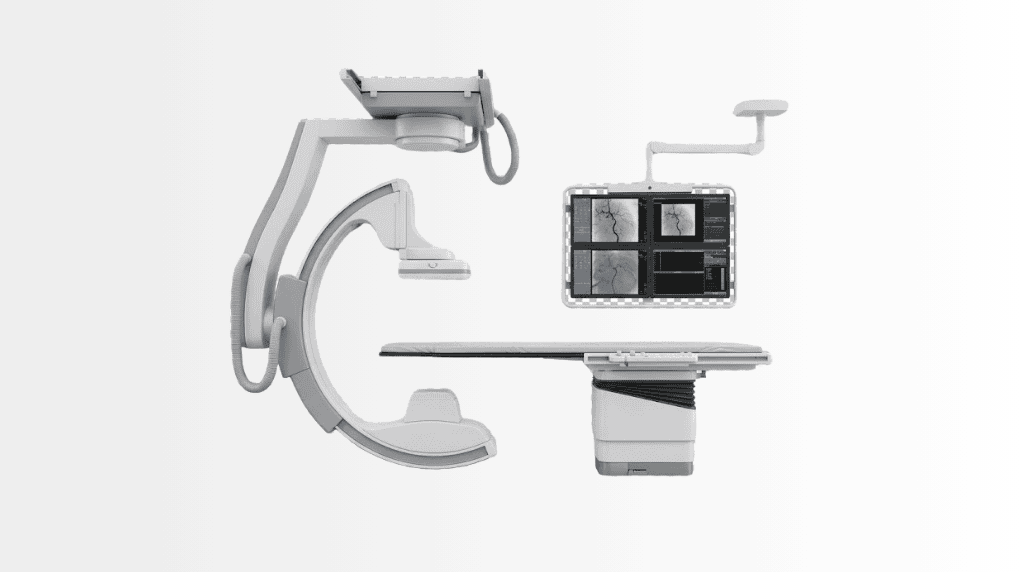
Digital subtraction angiography (DSA) is an X-ray imaging technique that uses contrast material and digital image processing to display blood vessels clearly by removing background structures. At Acibadem in Turkey, DSA is used to assess vascular conditions and to guide selected minimally invasive diagnostic and interventional procedures.
What is digital subtraction angiography?
DSA is catheter angiography with digital subtraction: through a small puncture — wrist or groin — a thin catheter is guided along the vessels to the territory in question; contrast is injected while rapid X-ray sequences run; and subtraction removes everything but the flowing contrast. The result outresolves CT and MR angiography where fine detail decides — tiny aneurysms, vessel-wall irregularities, the real-time direction and speed of flow through a malformation — which is why non-invasive angiography screens, and DSA confirms and treats.
What DSA is used for
Diagnostically: definitive mapping of brain aneurysms and arteriovenous malformations; carotid and peripheral artery disease where intervention is being planned; unexplained bleeding hunts; and pre-surgical vascular road-mapping. Therapeutically — the larger half of modern practice — DSA is the imaging backbone of interventional procedures: aneurysm coiling and flow-diversion, stroke thrombectomy, embolisation of bleeding vessels, fibroids and tumours, and the stents and balloons of cardiovascular and peripheral work. Diagnosis and treatment share one table, one catheter and often one hour.
The procedure: what to expect
DSA is usually done awake under local anaesthesia with sedation as needed. After the puncture site is numbed, catheter navigation itself is painless — vessels have no touch sensors — though contrast injections can bring seconds of warmth or flashing sensations. A diagnostic study typically takes 30–60 minutes; interventions run longer. Afterwards the puncture site is sealed and observed — a few hours of flat rest for groin access, less for wrist — with many diagnostic patients home the same day. Kidney function and allergies are screened beforehand because iodinated contrast is used; blood thinners are coordinated, not simply stopped.
DSA vs CT and MR angiography
CT angiography and MR angiography answer most vascular questions non-invasively, and they rightly come first. DSA’s territory is what remains: findings that need finer resolution or true flow dynamics, disagreements between scans, and — decisively — every case where treatment is likely, since the catheter that confirms can treat in the same session. The honest sequence in a modern centre is screen non-invasively, catheterise with intent.
Honest risks
DSA is invasive and honest pages say so: puncture-site bruising is common and minor; serious complications — vessel injury, stroke in cerebral work, contrast reactions, kidney strain — are uncommon in experienced hands and quantified for your case beforehand. Experience concentrates safety: high-volume interventional teams, anaesthesia backup and post-procedure observation are what turn a powerful tool into a routinely safe one.
DSA at Acibadem
DSA suites operate across the group’s interventional radiology and cardiovascular practice — corporate-verified angiography installations run from Istanbul’s hybrid floors to Bursa’s coronary and DSA units and City Clinic Tokuda’s imaging floors — working beside neurosurgery and neurology for cerebrovascular cases. Records-first applies: your CT/MR angiography travels ahead, so a catheter study happens only with a defined question or a treatment plan attached.
The thrombectomy era: DSA as emergency medicine
Nothing recast angiography’s role like stroke thrombectomy. For large-vessel ischaemic stroke — a major brain artery blocked by clot — catheter retrieval of the clot on the DSA table is among modern medicine’s most effective interventions, with benefit measured in whole grades of independence and treatment windows that imaging, not the clock alone, now defines. The chain is unforgiving: recognition, imaging that confirms salvageable brain, and a team that moves from door to reopened artery in minutes that matter. This is why angiography suites live inside stroke pathways rather than beside them, and why neurology, neurointervention and anaesthesia rehearse the sequence as one organism. The same emergency logic serves bleeding: embolisation stops haemorrhage — gastrointestinal, obstetric, traumatic — through a puncture, replacing open operations in shocked patients for whom surgery itself was the second injury.
Preparing for an angiogram: the details that matter
The checklist that smooths the day: recent kidney values, since contrast dosing is planned around them and hydration protocols protect borderline kidneys; a complete medication list — metformin, anticoagulants and antiplatelets each carry specific timing instructions rather than blanket stopping; allergy history, because prior contrast reactions are pre-treated, not merely noted; fasting per instructions when sedation is planned; and — practical but real — arranging the quiet day afterwards, since puncture sites dislike stairs, lifting and long drives on day one. Bring prior vascular imaging or have it sent: the diagnostic question shapes catheter choice and projections before you arrive. Afterwards, the honest self-monitoring is simple: a growing, hard or painful lump at the puncture site, a cold or pale limb, or any new neurological symptom earns an immediate call — your discharge sheet says exactly whom.
Where it is installed
17 in total Acibadem Maslak Hospital
İstanbul · 282 doctors
Acibadem Maslak Hospital
İstanbul · 282 doctors
 Acibadem Altunizade Hospital
İstanbul · 301 doctors
Acibadem Altunizade Hospital
İstanbul · 301 doctors
 Acibadem Atasehir Hospital
İstanbul · 221 doctors
Acibadem Atasehir Hospital
İstanbul · 221 doctors
 Acibadem Atakent Hospital
İstanbul · 160 doctors
Acibadem Atakent Hospital
İstanbul · 160 doctors
 Acibadem Kent Hospital (Izmir)
İzmir · 164 doctors
Acibadem Kent Hospital (Izmir)
İzmir · 164 doctors
 Acibadem Taksim Hospital
İstanbul · 64 doctors
Acibadem Taksim Hospital
İstanbul · 64 doctors
 Acibadem Adana Hospital
Adana · 109 doctors
Acibadem Adana Hospital
Adana · 109 doctors
 Acibadem Ankara Hospital
Ankara · 74 doctors
Acibadem Ankara Hospital
Ankara · 74 doctors
 Acibadem Bakirkoy Hospital
İstanbul · 110 doctors
Acibadem Bakirkoy Hospital
İstanbul · 110 doctors
 Acibadem Bodrum Hospital
Muğla · 93 doctors
Acibadem Bodrum Hospital
Muğla · 93 doctors
 Acibadem Dr. Sinasi Can (Kadikoy) Hospital
İstanbul · 109 doctors
Acibadem Dr. Sinasi Can (Kadikoy) Hospital
İstanbul · 109 doctors
 Acibadem Eskisehir Hospital
Eskişehir · 96 doctors
Acibadem Eskisehir Hospital
Eskişehir · 96 doctors
Frequently asked questions
What is stroke thrombectomy?
Catheter removal of the clot blocking a major brain artery, performed on the DSA table — one of modern medicine’s most effective emergency interventions when the chain from door to artery moves fast.
Do I stop metformin or blood thinners before a DSA?
Neither is simply stopped — each carries specific timing instructions coordinated with the team; bring your full medication list early.
What symptoms after the procedure need an immediate call?
A growing or painful puncture-site lump, a cold or pale limb, or any new neurological symptom — the discharge sheet lists them and the number to call.
Is DSA painful?
The puncture site is numbed and catheter navigation itself is painless; contrast injections can bring brief warmth or light flashes, and sedation keeps you comfortable.
Am I awake during the procedure?
Usually yes, with sedation as needed — being responsive helps in some cerebral studies; deeper anaesthesia is used where the plan calls for it.
How long does a DSA take?
Diagnostic studies typically 30–60 minutes; interventional procedures longer, by their nature.
Wrist or groin — where does the catheter go in?
Both routes are standard; the team chooses by target territory and your anatomy. Wrist access typically means shorter rest afterwards.
How long until I can go home?
After a diagnostic study, commonly the same day following observation and puncture-site rest; interventions may add an overnight stay.
Why do a DSA if I already had a CT or MR angiogram?
Because DSA resolves what they leave open — finer detail, true flow dynamics — and because the confirming catheter can treat in the same session.
What are the risks?
Minor bruising commonly; serious complications — vessel injury, stroke in cerebral work, contrast or kidney effects — uncommonly, and quantified for your case before consent.
How can we help you today?
Send your diagnosis and reports — a senior specialist reviews them and replies.
Send my reportsMeet an Acıbadem specialist by secure video, before you travel.
Book a video visit