
Hair Transplants Without Finasteride: What Changes When You Skip Medication
Quick AnswerYes, a hair transplant can be performed without finasteride, and the transplanted grafts usually survive because they come from areas naturally resistant to the hormone process behind pattern baldness. What changes is everything around…
- September 18, 2026
- Acıbadem Healthcare Group
Quick Answer
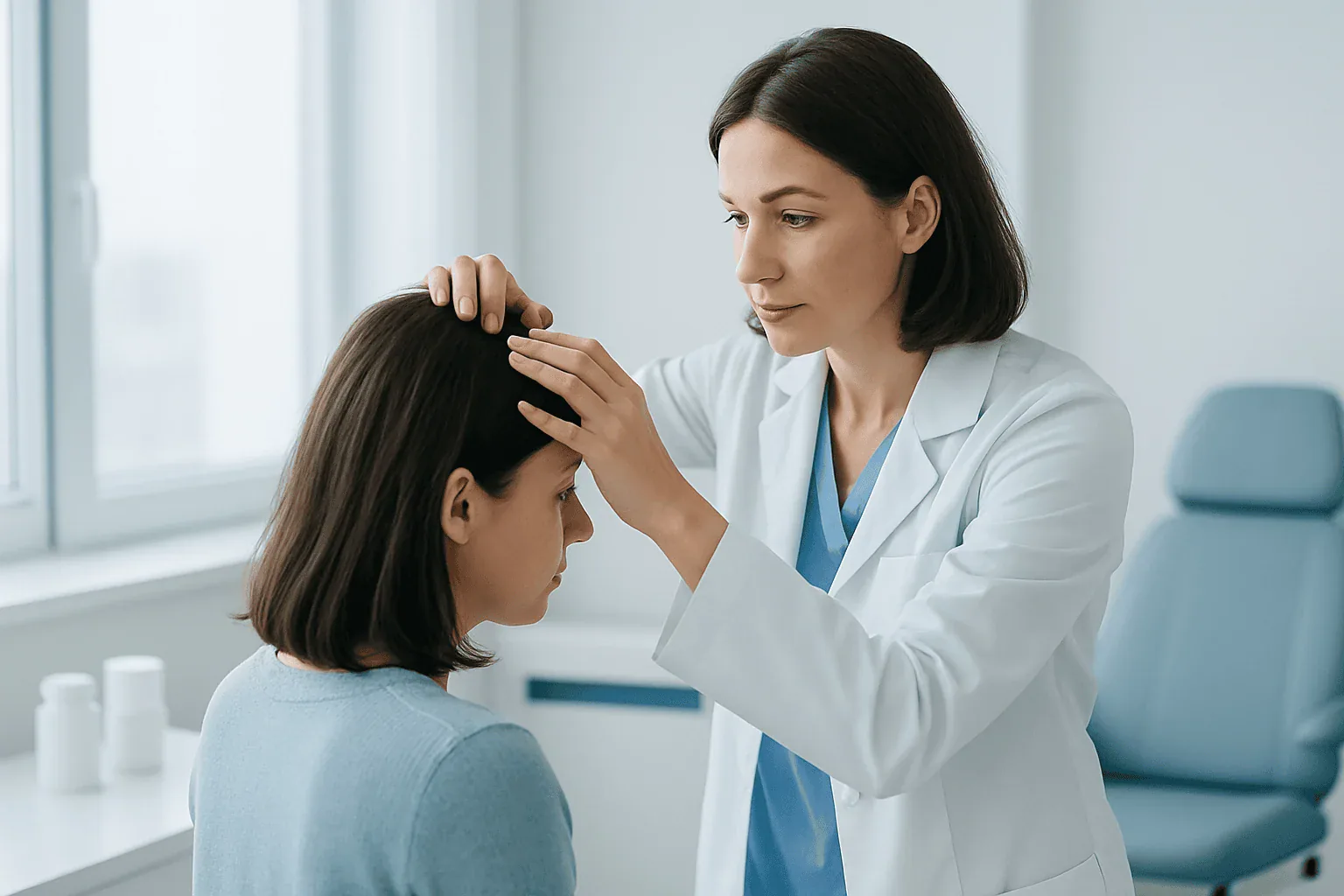
Yes, a hair transplant can be performed without finasteride, and the transplanted grafts usually survive because they come from areas naturally resistant to the hormone process behind pattern baldness. What changes is everything around them: untreated native hair often keeps thinning over the years, which can alter the overall result and lead some people to consider further sessions or adjusted styling later on.
There is a moment in almost every hair transplant consultation that catches people off guard. They came to talk about grafts, hairlines, and healing time — and instead the conversation turns to a daily pill. For some, that is a dealbreaker. They wanted a one-time procedure, not a long-term prescription, and they leave the appointment wondering whether the surgery even makes sense on its own.
It is a fair question, and it deserves a straighter answer than it usually gets online, where forums swing between doom and denial. The honest version sits in the middle, and it rests on a quirk of biology that has been understood since the mid-twentieth century: not all hair on your head responds to hormones the same way.
That quirk is why transplants work at all — and it is also why skipping medication changes the long game far more than it changes the surgery itself.
Why does every transplant consult bring up medication?
Male pattern hair loss — androgenetic alopecia, in clinical language — is driven largely by dihydrotestosterone, or DHT, a byproduct of testosterone. In people with a genetic sensitivity, DHT gradually shrinks hair follicles on the top and front of the scalp. Each growth cycle produces a slightly finer, shorter hair, until the follicle produces almost nothing visible at all. According to the NHS, this pattern affects a large share of men as they age, and it is progressive by nature: left alone, it tends to continue.
Finasteride, the medication in this article’s title, works by lowering the amount of DHT the body produces. Surgeons raise it at consultations not to upsell a prescription but because it addresses the one thing surgery cannot: the ongoing miniaturization of the hair you still have. A transplant relocates follicles; it does not stop the underlying process.
Think of it this way. The surgery is landscaping. The hormone process is the weather. You can plant a beautiful garden without checking the forecast, and the new plants may do fine — but the rest of the yard will keep responding to conditions you have not changed.
None of this means medication is mandatory, and it is not the right choice for everyone. But understanding why it comes up is the first step to making a clear-eyed decision about going without it.
Can you get a hair transplant without finasteride?
You can, and people do — regularly. There is no medical requirement to take hormone-modifying medication before or after a transplant, and no reputable surgeon should present it as a condition of surgery. What a careful surgeon will do is explain how the decision reshapes expectations, planning, and possibly the number of procedures you have over a lifetime.
The reason surgery stands on its own comes down to a principle called donor dominance, first described by dermatologist Norman Orentreich in the 1950s. Hair follicles taken from the back and sides of the scalp — the horseshoe of hair that persists even in advanced baldness — carry their genetic resistance to DHT with them when moved. Transplant that follicle to the crown, and it generally behaves as if it were still on the back of the head.
That principle is the foundation of every modern transplant technique, whether follicular unit excision (individual grafts punched out one by one) or strip surgery (a band of scalp removed and dissected into grafts). As MedlinePlus notes in its overview of the procedure, transplanted hair typically sheds within weeks and then regrows from the relocated follicles over the following months.
So the short answer is yes. The longer answer — the one that actually matters for how you will look in five or ten years — is about what the medication would have been protecting, and what happens when nothing is.
Will the transplanted grafts survive without medication?
In general, yes. Graft survival depends primarily on surgical factors — how gently follicles are extracted, how long they spend outside the body, how they are stored and placed — and on your healing, not on whether you take medication afterward. The donor-dominant follicles bring their hormone resistance with them.
A few honest caveats belong here. First, resistance is not immortality. All hair thins somewhat with age, transplanted or not, through processes unrelated to DHT. A graft placed at 30 will not necessarily look identical at 70, though it usually remains far more durable than the native hair it replaced.
Second, donor hair exists on a spectrum. Follicles taken from the very center of the permanent zone at the back of the head tend to be the most resistant; grafts harvested closer to the edges of that zone — sometimes necessary in larger sessions — may carry more sensitivity and thin modestly over decades.
Third, the weeks right after surgery are their own story. Most transplanted hairs shed between roughly two and eight weeks post-procedure, a normal and expected phase, before new growth appears around the three- to four-month mark. Some patients also experience temporary shedding of native hair near the surgical site, called shock loss, which usually recovers on its own.
None of those caveats hinge on medication. If your question is narrowly “will the grafts take without a prescription,” the evidence-based answer is that graft survival is chiefly a surgical and biological matter, not a pharmaceutical one.
What happens to the hair you were born with?
Here is where the decision genuinely bites. Pattern hair loss is progressive: according to Mayo Clinic, hereditary hair loss typically advances gradually and in predictable patterns — a receding hairline and expanding crown in men, diffuse thinning along the part in women. A transplant does nothing to interrupt that trajectory in the surrounding native hair.
Picture a typical 32-year-old with a receded hairline and early crown thinning. A transplant can rebuild the hairline convincingly. But the native hair behind that new hairline — the hair filling the mid-scalp — remains fully exposed to DHT. Over the following decade, it may continue to miniaturize exactly as it would have without surgery.
How fast? That varies enormously, and anyone who quotes you a precise timeline is guessing. Some people’s loss progresses briskly through their thirties and then stabilizes; others thin steadily into their sixties. Family history offers hints but no guarantees — the genetics involve multiple genes and can be inherited from either parent, contrary to the old myth about your mother’s father.
What is predictable is the direction. Without something slowing the hormonal process, the realistic planning assumption is continued loss, not stability. Good surgeons plan for the scalp you are likely to have at 50, not the one in the consultation chair. That is not pessimism; it is the difference between a result that ages gracefully and one that ages awkwardly.
The island effect: why untreated thinning changes the whole picture
Surgeons have an unglamorous shorthand for the worst-case pattern: the island. It happens when a transplanted hairline holds firm — as donor-dominant grafts tend to do — while the native hair behind it continues to recede. Years later, the patient has a strong strip of hair at the front, a bald or thinning gap behind it, and the remaining fringe farther back. From above, the transplanted zone looks like an island separated from the mainland.
A related pattern affects the crown. Transplanted density in the middle of an expanding bald spot can end up ringed by a widening halo of thin native hair, making the graft placement conspicuous rather than seamless.
Neither outcome means the surgery failed. The grafts did exactly what grafts do. The problem is compositional: a natural head of hair reads as a continuous gradient, and progressive loss around a fixed transplanted zone breaks that gradient in ways the eye notices.
The practical implications are worth stating plainly:
- Results without medication should be judged on a ten-year horizon, not a one-year photo.
- Follow-up sessions to “chase” ongoing loss are more likely, which draws on a strictly limited donor supply.
- Conservative initial design — a slightly higher, more mature hairline — is protective, because it leaves donor hair in reserve for the future.
People who understand the island effect going in rarely regret their choice, whichever way they decide. People who learn about it at year six often do.
What the evidence actually says about medication after a transplant
It is worth being precise about what medication does and does not add, because both the enthusiasm and the skepticism online tend to overshoot.
What the evidence supports: finasteride is an established, guideline-recognized treatment for male pattern hair loss. Mayo Clinic and the NHS both describe it as capable of slowing loss in many men and promoting some regrowth in a subset, with effects typically taking several months to appear. In the transplant context, its role is protective — helping preserve the native hair around and behind the grafts, which supports a more uniform long-term result.
What the evidence does not support: the idea that medication is necessary for graft survival, or that skipping it dooms the procedure. Grafts survive on donor dominance. Nor does medication guarantee stability; it slows the process for most users rather than freezing it for all, and its benefits generally last only as long as treatment continues. Stop, and loss typically resumes within months to a year.
What remains uncertain: exactly how much long-term cosmetic difference medication makes after a transplant for any individual. Trials measure hair counts in study populations over a few years; they cannot tell you whether your particular mid-scalp will hold for two decades. Honest framing sounds like this: medication meaningfully improves the odds that the hair around your grafts persists, without promising it.
That framing matters. The choice to skip is not reckless, and the choice to take it is not a cure. Both are bets, with different odds attached.
Why do people skip it in the first place?
The reasons are more varied — and more reasonable — than the arguments online suggest.
Some people simply do not want a daily medication for a cosmetic concern, indefinitely. That is a legitimate values judgment, not a failure of nerve. Others are planning a family and prefer to avoid hormone-modifying medication during that window; this is a conversation to have with a doctor rather than a forum. Some have medical histories that make their physician cautious. And some tried the medication, experienced side effects, and stopped.
On side effects, the balanced summary from mainstream sources runs like this: most men tolerate the medication without problems, and a minority report sexual side effects such as reduced libido or erectile difficulties. For most who experience them, these resolve after stopping. A smaller number of men have reported persistent symptoms, and research into how common that is — and why — is ongoing rather than settled. That is genuinely what the evidence shows: reassuring on the whole, not dismissive of individual experience, and not fully resolved at the edges.
There is also a quieter group: people whose hair loss appears to have stabilized on its own. Pattern loss does not progress at a constant rate forever, and a 55-year-old whose pattern has barely moved in a decade faces different math than a 28-year-old thinning fast.
Whatever the reason, the useful move is to say it out loud at the consultation. A surgeon who knows you are planning to skip medication can design accordingly. One who assumes you will take it may plan a result that depends on it.
How skipping medication changes surgical planning
A transplant designed for a medicated scalp and one designed for an unmedicated scalp can look quite different on paper, even for the same patient.
The hairline usually moves. Without medication, experienced surgeons tend to place the hairline slightly higher and shape it more conservatively — closer to a mature adult hairline than a teenage one. A low, flat, youthful hairline looks wonderful at 30 and increasingly incongruous at 55 if the hair behind it has retreated. Height buys future-proofing.
Density gets rationed differently. Rather than packing maximum grafts into the frontal zone, a surgeon planning for progression may distribute coverage to blend with likely future loss, or deliberately hold grafts in reserve.
The crown often waits. Crowns are graft-hungry — the whorl pattern demands high numbers for modest visual payoff — and an expanding crown around a transplanted core creates the halo problem. Many surgeons counsel unmedicated patients to defer crown work until the pattern declares itself.
Staging becomes the default assumption. Instead of one large session aiming at a finished look, the plan may anticipate a second procedure in five to ten years, with donor supply budgeted for it now.
Timing may shift, too. Very young patients with early, aggressive loss and no medication on board are the group most surgeons ask to wait, because their final pattern is the least predictable. A year of watchful waiting costs little; misjudged grafts are permanent.
None of this makes surgery worse. It makes it honest — designed for the scalp you will have, not the one you have today.
Donor hair is a budget, and skipping medication spends it faster
The most underappreciated fact in all of hair restoration is that donor hair is strictly finite. The permanent zone at the back and sides of the scalp contains a fixed number of follicles that can safely be moved over a lifetime — harvest too aggressively and the donor area itself becomes visibly thin, with no way to replenish it. Every graft used today is a graft unavailable in fifteen years.
Medication changes the arithmetic of that budget. When the hair around a transplant is being protected, the grafts placed in session one may be the only grafts ever needed. When native loss continues unchecked, the transplanted zones need periodic reinforcement or extension, and each round draws down the same fixed account.
Run the thought experiment. A person who ultimately progresses to extensive baldness may have a bald zone whose full coverage would demand far more grafts than any donor area can supply. That is why surgeons talk about coverage and illusion rather than restoration — strategic density at the hairline and part, lighter coverage elsewhere — and why they guard the donor area so jealously in younger, unmedicated patients.
For perspective on the underlying scale: a scalp carries on the order of 100,000 hairs, and Mayo Clinic notes that shedding 50 to 100 a day is normal. Pattern loss is not shedding, though — it is follicles progressively downsizing — and no amount of donor hair can outpace an aggressive pattern indefinitely.
Skipping medication is compatible with great long-term results. It just requires treating donor supply like retirement savings: spent deliberately, with decades in mind.
What to expect year by year without medication
Every scalp writes its own script, but the broad arc after an unmedicated transplant is consistent enough to sketch. The first year belongs to the surgery; the years after belong to your genetics.
| Timeframe | Transplanted grafts | Untreated native hair |
|---|---|---|
| Weeks 2–8 | Most transplanted hairs shed — normal and expected as follicles reset | Possible temporary shock loss near the surgical zones, usually recovering on its own |
| Months 3–6 | New growth emerges; early hairs are fine and often uneven | Baseline pattern resumes; any shock loss typically regrows |
| Months 9–14 | Result largely matures; hair thickens and gains texture | Loss continues at its individual pace — often too slowly to notice year to year |
| Years 2–5 | Grafts generally stable and behaving like donor-area hair | Progression may become visible: a thinning zone behind the hairline, a slowly widening crown |
| Years 5–15 | Mostly durable; gradual age-related fining possible | The decisive period — this is where blending holds or the island effect emerges |
The pattern worth internalizing: the transplant column is front-loaded with drama and then goes quiet, while the native-hair column starts quiet and carries all the long-term suspense. Annual photos under consistent lighting are the cheapest monitoring tool there is — progression that is invisible day to day is obvious across yearly snapshots, and catching it early keeps every option open.
Are there non-drug ways to protect native hair?
This is where honesty matters most, because the market is crowded with products whose marketing outruns their evidence.
Topical medications exist that work through a different mechanism — stimulating follicles locally rather than altering hormones — and mainstream sources including the NHS and Mayo Clinic recognize them as established options that can slow loss and support regrowth in some people while used. They require ongoing application, and benefits fade after stopping. Whether one suits you is a conversation for your own clinician, particularly around a surgery date, since timing matters for healing skin.
Low-level laser devices — combs, caps, helmets — have some supportive trial data suggesting modest benefit for some users, but the studies are generally small, short, and variable in quality. The fair summary is “possibly helpful, not robustly proven.”
Platelet-rich plasma injections show mixed results across studies, with no standardized protocol; major medical centers describe the evidence as promising but preliminary.
Supplements deserve particular skepticism. Correcting a genuine deficiency — iron, vitamin D — can help hair if the deficiency was contributing, which is why blood work is worth doing. But in the absence of a deficiency, evidence that supplements slow pattern loss is weak, and NIH’s Office of Dietary Supplements notes that more is not better; excess of certain nutrients can itself trigger shedding.
Lifestyle basics — managing stress, not smoking, gentle hair handling, adequate protein — support overall hair health without altering the hormonal process. Worth doing; not a substitute for a plan.
The bottom line: non-drug tools may help at the margins. Nothing over the counter reliably replicates what hormone-pathway medication does, and any product claiming otherwise has left the evidence behind.
Questions worth asking before you book anything
A consultation is an interview that runs both directions. If you are planning to skip medication, these questions separate surgeons who plan for reality from those who plan for the photo at month twelve.
- “Design this hairline for me at 55, not 35 — walk me through your reasoning.” A thoughtful answer references your family history, your current pattern, and donor reserves.
- “If my native hair keeps receding, what does this result look like in ten years, and what would fixing it cost in grafts?” You want a surgeon who has already gamed this out.
- “How many grafts do you estimate my donor area can supply over my lifetime, and how much of that does this plan spend?” The budget conversation, out loud.
- “Would you advise me to wait?” Especially if you are under 30 with active loss. A surgeon willing to delay revenue is telling you something valuable.
- “What is your plan for my crown?” Listen for caution. Eagerness to densely pack an early-stage crown in an unmedicated patient is a yellow flag.
- “Can I see results of your patients five or more years out — not just at one year?” One-year photos flatter everyone; five-year photos tell the truth about planning.
You are not looking for the surgeon who promises the most. You are looking for the one who volunteers the trade-offs before you ask — because that habit predicts how they will handle every decision you cannot see.
Who is well suited to skipping — and who should think twice?
Not all unmedicated transplant candidates carry the same risk. A few patterns emerge from how surgeons actually triage.
The strongest candidates tend to be older patients — broadly, mid-forties onward — whose loss has visibly slowed or plateaued. Their future pattern is largely written; the surgeon is filling in a known map rather than forecasting one. Strong candidates also include people with limited, stable loss (an isolated frontal recession that has not moved in years) and those with generous donor density relative to the area needing coverage.
The group that warrants the most caution is almost the mirror image: patients in their twenties with rapid, diffuse thinning and a family history of extensive baldness. Their eventual pattern is the hardest to predict, their donor demand is potentially the largest, and an aggressive early transplant without any brake on progression is the classic setup for the island effect. For this group, many surgeons suggest waiting and watching — sometimes a year or two — before committing permanent grafts.
In between sits everyone else, where the decision is a genuine judgment call weighing pattern, pace, family history, donor supply, and personal priorities.
One more group deserves mention: women. Female pattern hair loss is common — MedlinePlus notes hereditary loss affects women as well as men — but its diffuse pattern makes transplant candidacy more selective, and the medication discussed here is a treatment for men. Women considering surgery should seek evaluation from a clinician experienced specifically in female hair loss, where the diagnostic workup matters even more.
When to see a doctor about hair loss
Pattern baldness is gradual and follows recognizable shapes. Hair loss that does not fit that description deserves medical evaluation before anyone discusses surgery — because transplanting into an undiagnosed scalp condition can waste grafts or worsen the problem.
See a doctor promptly if you notice any of the following, which Mayo Clinic and the NHS flag as reasons for evaluation:
- Sudden or rapid shedding, or hair coming out in clumps — this suggests a trigger such as illness, medication, or significant stress rather than pattern loss.
- Patchy, circular bald spots, which can indicate alopecia areata, an autoimmune condition with entirely different treatment.
- Scalp symptoms accompanying the loss — itching, burning, scaling, redness, or pain — which may point to inflammatory or scarring conditions where early treatment protects follicles.
- Hair loss alongside other symptoms such as fatigue, unexplained weight change, or menstrual irregularities, which can signal thyroid or other systemic causes.
- Loss in a woman with a male-type pattern or other signs of hormonal imbalance.
After a transplant, contact your surgical team without delay for signs of infection — spreading redness, worsening pain, swelling, discharge, or fever — or for bleeding that does not settle with gentle pressure.
And even for garden-variety pattern loss, a proper diagnosis is worth the visit. A clinician can confirm the pattern, check for contributing factors such as iron deficiency or thyroid dysfunction with simple blood tests, and give you a realistic read on your trajectory. Every good decision downstream — medication or not, surgery or not, now or later — starts with knowing exactly what you are treating.
So is skipping medication a mistake?
No — but it is a decision that only works well when it is made with open eyes, and it fails quietly when it is made by default.
The evidence supports three plain statements. Transplanted grafts do not need medication to survive; donor dominance handles that. Untreated native hair will, in most people, continue to thin on its own schedule. And the gap between those two facts is where every long-term outcome — good or awkward — is decided.
If pressed for an opinion, here it is: the single most consequential variable in an unmedicated transplant is not the graft count, the technique, or even the surgeon’s artistry. It is whether the plan was designed for progression. A conservative hairline, a cautious crown, a donor budget with reserves, and a habit of annual photos will protect an unmedicated result better than any product ever will. Patients who have those four things tend to age well with their transplants. Patients who chased a dense, low, youthful hairline at 27 with nothing slowing the tide behind it are the ones who populate the cautionary threads.
The decision about medication belongs to you and your doctor — weighing your health history, your family planning, your tolerance for daily treatment, and your own risk calculus. Whichever way it lands, insist that your surgical plan match it. A transplant without medication is not a lesser transplant. It is a different one, and it deserves to be planned that way from the first consultation.
More news
6 in total Body Hair Transplants: Using Chest or Beard Hair When Donor Supply Runs Short
17 min read
Body Hair Transplants: Using Chest or Beard Hair When Donor Supply Runs Short
17 min read
 FUE vs DHI: What the Implanter Pen Changes — and What It Does Not
17 min read
FUE vs DHI: What the Implanter Pen Changes — and What It Does Not
17 min read
 FUE Scars: What the Donor Area Really Looks Like at Buzz-Cut Length
17 min read
FUE Scars: What the Donor Area Really Looks Like at Buzz-Cut Length
17 min read
 ARTAS Robotic Hair Transplant: What the Robot Does Better — and What It Cannot
16 min read
ARTAS Robotic Hair Transplant: What the Robot Does Better — and What It Cannot
16 min read
 Moustache Transplants: Filling Gaps and Scars in the Upper Lip, Properly
16 min read
Moustache Transplants: Filling Gaps and Scars in the Upper Lip, Properly
16 min read
 Hair Transplants With Diabetes: What Good Control Makes Possible
18 min read
Hair Transplants With Diabetes: What Good Control Makes Possible
18 min read
Frequently asked questions
Do transplanted hairs fall out without finasteride?
Generally, no — not permanently. Transplanted follicles come from the back and sides of the scalp, areas genetically resistant to the hormone process driving pattern baldness, and they retain that resistance after relocation. The grafted hairs do shed temporarily in the first weeks after surgery, which is a normal reset phase, then regrow from around month three. Long-term graft survival depends mainly on surgical quality and healing, not on medication.
Is a hair transplant permanent without medication?
The transplanted grafts are considered long-lasting because of donor dominance, though all hair thins somewhat with age. What is not permanent is the appearance of the overall result: the native hair surrounding the grafts usually keeps thinning without treatment, which can change how the transplant blends over five to fifteen years. Many people plan for a possible follow-up session for that reason.
What is the island effect after a hair transplant?
It describes a transplanted hairline that stays intact while untreated native hair behind it continues to recede, leaving a strip of strong hair separated from the remaining fringe — like an island. A similar halo pattern can develop around a transplanted crown. It reflects ongoing pattern loss around durable grafts, not surgical failure, and conservative planning plus monitoring reduces the risk of it looking conspicuous.
How fast will my native hair thin after a transplant if I skip medication?
There is no reliable way to predict an individual's pace. Pattern loss progresses gradually, sometimes in bursts followed by quieter stretches, and family history offers hints rather than guarantees. Some people barely change over a decade; others progress noticeably within a few years. Annual photographs under consistent lighting are the most practical way to track your own trajectory and catch progression early.
Are there alternatives to finasteride for protecting hair after a transplant?
Partially. Topical medications that stimulate follicles locally are recognized by mainstream sources as able to slow loss in some people while used. Low-level laser devices and platelet-rich plasma have preliminary, mixed evidence. Supplements help mainly when correcting a genuine deficiency confirmed by blood work. None of these reliably matches the effect of hormone-pathway medication, so discuss realistic expectations with your own clinician.
Should young men get a hair transplant without taking medication?
This is the group where surgeons urge the most caution. Men in their twenties with active, rapid loss have the least predictable final pattern and the greatest lifetime demand on a fixed donor supply. An aggressive early transplant with nothing slowing progression is the classic setup for a poorly aging result. Many surgeons recommend waiting, monitoring for a year or more, and choosing conservative designs if surgery proceeds.
Does skipping medication change how many grafts I need?
Often, yes — over a lifetime. The initial session may use similar numbers, but ongoing native loss makes follow-up sessions more likely, and each one draws from the same finite donor area. Surgeons planning for an unmedicated patient typically ration grafts more carefully, favor higher and more conservative hairlines, and may defer crown work so reserves remain for future needs.
Can women have a hair transplant without hormone medication?
The medication in this article's title is a treatment for men, so the question differs for women from the start. Female pattern loss tends to be diffuse, which makes transplant candidacy more selective — donor hair must itself be stable. Women considering surgery should first have a thorough evaluation, including blood work, from a clinician experienced in female hair loss to confirm the diagnosis and candidacy.
What happens if I take medication for a while and then stop after my transplant?
Benefits generally last only during treatment. Mainstream sources note that when the medication is stopped, hair loss typically resumes within months to about a year, returning the native hair to its untreated trajectory. The transplanted grafts themselves are not affected by stopping. If you anticipate not wanting long-term treatment, tell your surgeon before the design stage, since the plan should reflect that.
How do I know my hair loss is actually pattern baldness and not something else?
See a doctor for a proper diagnosis rather than assuming. Pattern loss is gradual and follows recognizable shapes — receding hairline and crown in men, part-line widening in women. Sudden shedding, patchy circular spots, scalp itching, scaling, or pain, or loss accompanied by fatigue or weight changes point toward other causes such as autoimmune, inflammatory, thyroid, or nutritional conditions, each treated differently. Blood tests and a scalp exam usually clarify things quickly.
How can we help you today?
Send your diagnosis and reports — a senior specialist reviews them and replies.
Send my reportsMeet an Acıbadem specialist by secure video, before you travel.
Book a video visit