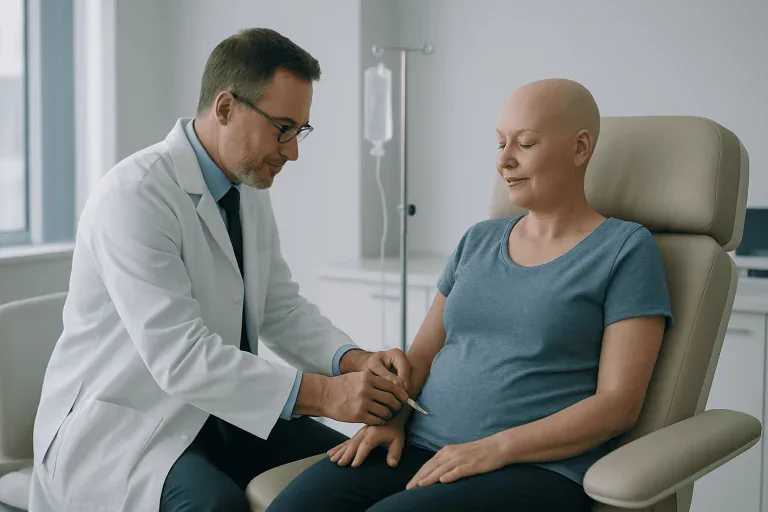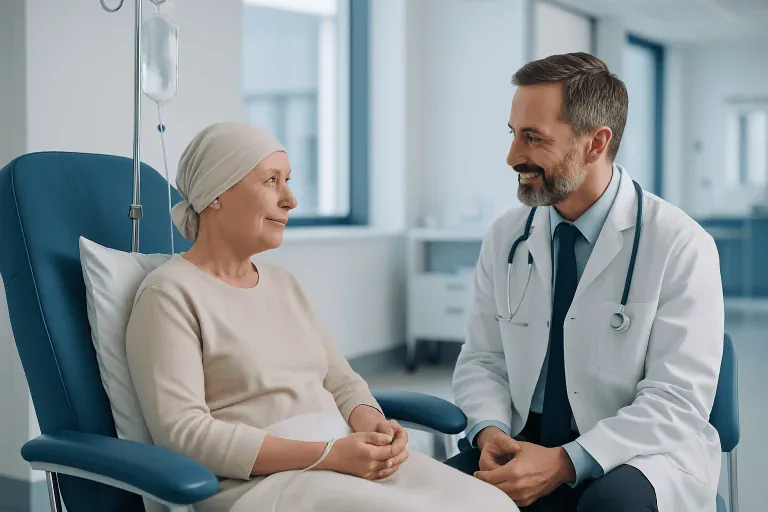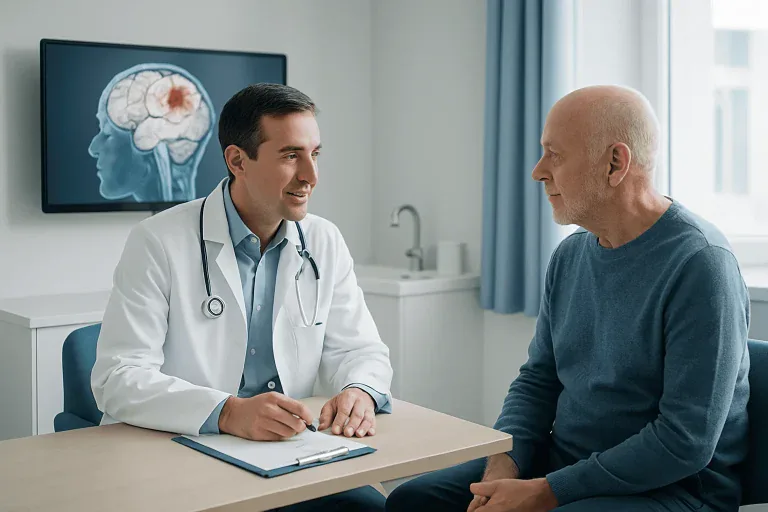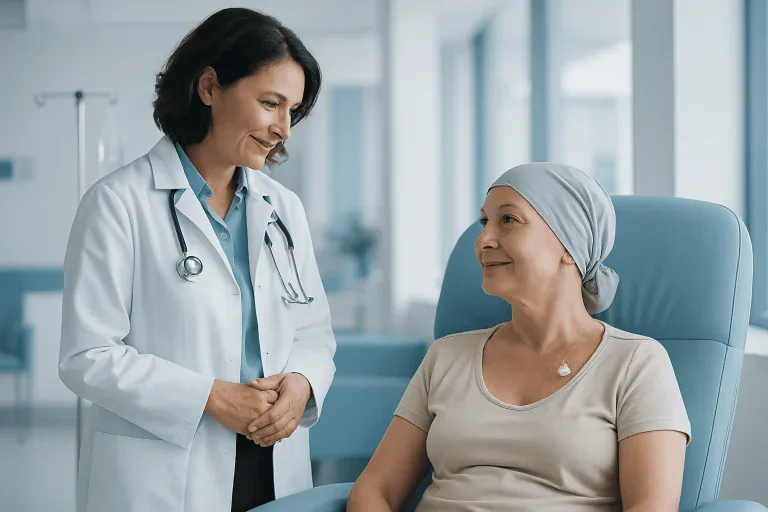
Chemotherapy Port: What It Means, What to Expect and When to See a Specialist
Quick AnswerA chemotherapy port is a small device, roughly the size of a quarter, placed under the skin of the…
- 10 answers

Evidence-first answers to the questions people actually search — sleep, blood tests, vitamins, gut health — written in plain language and reviewed by clinicians, plus news from across the Acıbadem network.
Quick AnswerA chemotherapy port is a small device, roughly the size of a quarter, placed under the skin of the…
Quick AnswerA bone marrow transplant, also called a stem cell transplant, replaces damaged or destroyed blood-forming stem cells with healthy…
Quick AnswerChemotherapy and radiation are different tools for the same job. Chemotherapy uses medicines that travel through the bloodstream to…
Quick AnswerChemotherapy is usually grouped in three ways: by goal (curative, adjuvant or neoadjuvant to support surgery, and palliative to…
Quick AnswerChemotherapy hair loss happens because many chemotherapy medicines target fast-dividing cells, and the cells in hair follicles divide quickly.…
Quick AnswerChemotherapy for metastatic cancer is medicine that travels through the bloodstream to reach cancer cells wherever they have spread.…
Quick AnswerHair growth after chemotherapy usually begins within a few weeks of the final treatment, starting as soft fuzz and…
Quick AnswerRadiation therapy itself is not painful: the beam cannot be felt, much like having an X-ray, and each session…
Quick AnswerChemotherapy for stage 4 cancer is usually given to control the disease rather than cure it: to shrink or…
Quick AnswerChemotherapy has three time scales. A single session can take anywhere from a few minutes for an injection to…
Quick AnswerIntrathecal chemotherapy is chemotherapy injected directly into the cerebrospinal fluid that bathes the brain and spinal cord, usually through…
Quick AnswerThe main types of immunotherapy are checkpoint inhibitors, monoclonal antibodies, CAR T-cell and other adoptive cell therapies, cytokines, oncolytic…
Quick AnswerFamily members can safely live with, hug, and care for someone having chemotherapy. The drugs are not radioactive and…
Quick AnswerThere is no single success rate for radiation therapy, because results depend on the cancer type, its stage, and…
Quick AnswerImmunotherapy cost has no single figure because the bill is driven by which drug class is used, how many…
Quick AnswerMalignant brain tumors are graded rather than staged, and survival varies by grade, tumor type, age, and molecular features.…
Quick AnswerAbout 32 percent of people diagnosed with acute myeloid leukemia in the United States are alive five years later,…
Quick AnswerGlioblastoma survival rate statistics describe groups, not individuals. Across large cohorts, median survival after diagnosis is roughly 12 to…
Quick AnswerThere is no single best treatment for early-stage prostate cancer. Guidelines support three evidence-based paths: active surveillance with regular…
Quick AnswerMultiple myeloma rarely kills directly. Death comes from its complications: infections that an immune system crowded out by cancerous…
Quick AnswerIn most cases, no single cause of glioblastoma can be identified. The tumor arises when glial cells in the…
Quick AnswerGlioma is the umbrella term for tumors that arise from glial cells in the brain or spinal cord, ranging…
Quick AnswerChemotherapy for stage 4 lung cancer is a whole-body treatment intended to slow the cancer, shrink tumors and ease…
Quick AnswerAbout 60 percent of people diagnosed with multiple myeloma in the United States are alive five years later, according…
Send your diagnosis and reports — a senior specialist reviews them and replies.
Send my reportsMeet an Acıbadem specialist by secure video, before you travel.
Book a video visitGet the Acıbadem App
Your treatment plan, doctors and appointments in your pocket — the official Acıbadem app for iOS, Android and HarmonyOS devices.