
Interventional cardiology, electrophysiology and pacing, angiology and phlebology, cardiac and vascular surgery with 2 angiography laboratories.
International Hospitals
Acibadem Vitosha Hospital
The cardiovascular anchor of Acibadem's Sofia system: cardiology, electrophysiology, cardiac and vascular surgery across seven levels with 170+ beds.
- Treatment planning and referral
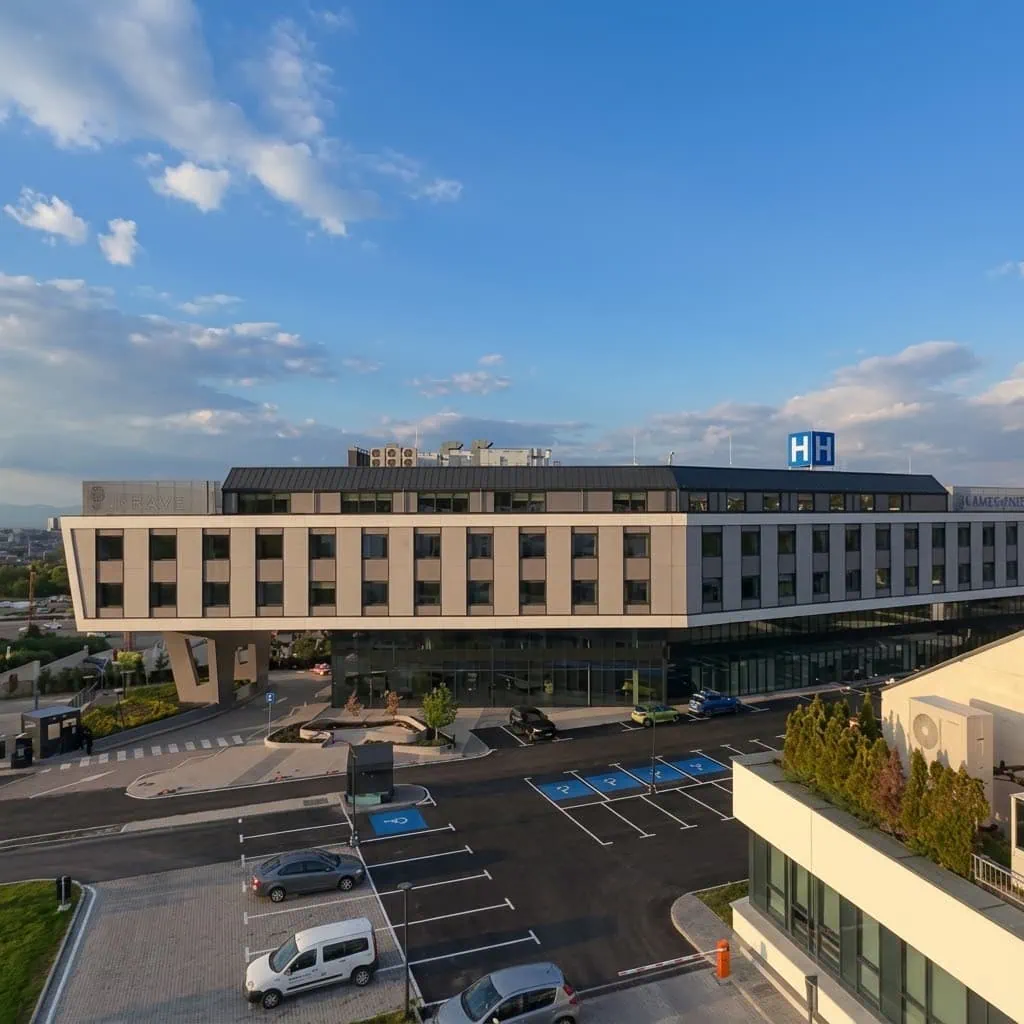
Acibadem Vitosha Hospital — Acibadem City Clinic University Hospital Vitosha in full — is the cardiovascular anchor of the group’s Sofia system: a seven-level campus of nearly 14,000 m², two floors below ground and five above, with more than 170 inpatient beds, six operating suites and a diagnostic and consultation centre of over 35 examination rooms. Its clinical spine is the heart and the vessels — cardiology, angiology, electrophysiology, cardiac surgery and vascular surgery — flanked by internal medicine, general surgery, intensive care, emergency medicine and imaging diagnostics, and it stands just across the Ring Road from the group’s well-known Cardiovascular Center, the two buildings forming one cardiovascular axis for the country.
What this building is organised around
Vitosha was built to give Bulgaria’s cardiovascular medicine a complete address: the rhythm question (electrophysiology), the vessel question (angiology and vascular surgery), the pump question (cardiology and cardiac surgery) and the safety net behind all three (intensive care and emergency medicine) in one engineered building. The proportions say it plainly — six surgical suites and 170-plus beds arranged around a single organ system, with a 35-room outpatient centre carrying the daily diagnostic load. Its position across the road from the Cardiovascular Center is not an accident; it is the axis’s second half, sharing a university-hospital culture and one records system.
Quality and safety — the honest frame
The hospital runs on the Acıbadem group’s audited protocols — surgical checklists, medication safety, infection control and credentialing — inside Bulgaria’s City Clinic university-hospital family, whose Sofia campus holds JCI accreditation among the group’s seven accredited hospitals. This page keeps the claim discipline the group holds everywhere: Vitosha’s own case is made by its verifiable design — specialised operating suites, intensive care engineered for cardiac work, a university-hospital staff culture — and by the group’s method: no major cardiovascular decision here is one clinician’s opinion.
The cardiovascular floors — rhythm, vessels, pump
The campus’s departments cover the discipline’s whole map. Cardiology carries diagnosis and intervention; electrophysiology answers the rhythm questions — the ablations and device decisions that modern cardiac care increasingly turns on; angiology and vascular surgery treat the vessels, from the legs’ circulation to the arteries that feed the brain; and cardiac surgery stands behind them all for the bypass and valve decisions that need a theatre. Six surgical suites and a purpose-built intensive care floor mean the pathway from a murmur heard in the consultation centre to a completed operation runs under one roof.
Beyond the heart — the supporting hospital
Around the cardiovascular spine, Vitosha is a working hospital: internal medicine for the whole-picture questions that surround every cardiac patient, general surgery, an emergency service, imaging diagnostics with state-of-the-art equipment, and the diagnostic and consultation centre whose 35-plus rooms carry the outpatient day. Patient rooms are modern, in two- and three-bed and higher-comfort configurations — a hospital designed in this decade, and it shows.
One axis, one system — honest routing in Sofia
Vitosha works as the cardiovascular node of the group’s Sofia campuses: the Cardiovascular Center across the Ring Road shares the axis; City Clinic Tokuda — the JCI-accredited, 550-bed general hospital — carries the full-width surgical and medical range; Mladost concentrates the cancer arsenal; Ortopedia the musculoskeletal programme. One records culture routes between them, and when a rare case genuinely belongs at an Istanbul flagship — congenital heart surgery at Atakent above all — the file travels with the patient and the reason is stated.
Technology, honestly framed
The installation matches the mission: six operating suites, intensive care engineered for cardiac and vascular work, state-of-the-art diagnostic equipment and laboratories that assess organ condition and function without harmful effects, and the imaging floor a cardiovascular hospital lives on. What the campus does not house is stated as plainly: the group’s paediatric and congenital-heart programmes, transplant floors and heaviest oncology machines live elsewhere in the network — and when a plan needs them, the coordinators say so first.
International patients at the cardiovascular campus
The group’s records-first process applies exactly as everywhere: reports, imaging and prior studies reviewed before travel, a written plan and cost estimate, interpreter support arranged, and discharge notes written for the cardiologist continuing care at home. Cardiovascular medicine travels well on records — an echo, an angiogram and a rhythm trace usually settle what a plan needs — so a records-based opinion from this campus is a rational first step for the region’s patients, with the EU location and Sofia’s connections making the planned visit a short one.
Getting here
The hospital stands at 1 Konstantin Pomyankov Street in Sofia, on the Ring Road directly across from the Cardiovascular Center, with the full address, map link and phone in the identity card at the top of this page. Sofia’s airport connects the capital across Europe, and for planned visits the coordinators arrange transfers as standard.
How to decide whether Vitosha is your hospital
Choose Vitosha when the question is cardiovascular: a rhythm problem needing electrophysiology, a vessel problem from varicose veins to carotid disease, a valve or bypass decision, or the full diagnostic work-up that settles whether any of those apply. Choose Tokuda for the general range, Mladost for cancer, and an Istanbul flagship for the congenital and transplant programmes only they house — every routing said aloud, file included. A hospital built around one organ system, inside a network that covers all the others, is the honest shape of specialisation.
Inside this facility
Seven levels, about 14,000 m², more than 170 beds, 6 operating theatres and a diagnostic and consultation centre with over 35 consultation rooms.
Cardiac catheterisation, endoscopic and endovascular procedures, neurovascular and peripheral vascular interventions.
Multilingual staff; support from travel and visa arrangements to treatment, aftercare and accommodation.
Frequently asked questions
What kind of hospital is Acibadem Vitosha?
The cardiovascular anchor of the group’s Sofia system — cardiology, angiology, electrophysiology, cardiac surgery and vascular surgery in a purpose-built seven-level campus.
How big is the hospital?
Nearly 14,000 m² across seven levels — two underground, five above — with more than 170 beds, six operating suites and a 35-room diagnostic and consultation centre.
What is electrophysiology and is it available here?
The rhythm half of cardiology — diagnosing and treating arrhythmias, including ablations and device decisions; it is one of the campus’s named departments.
Is cardiac surgery performed at Vitosha?
Yes — bypass and valve surgery in dedicated suites, with intensive care engineered for cardiac work behind the theatres.
Are vascular problems treated here?
Yes — angiology and vascular surgery cover the vessels’ whole range, from the legs’ circulation to the arteries that feed the brain.
What is the Cardiovascular Center across the road?
The axis’s other half — the group’s well-known cardiovascular campus directly across the Ring Road, sharing one university-hospital culture and records system with Vitosha.
Is Vitosha JCI-accredited?
Honestly framed: the group’s seven JCI-accredited hospitals include the City Clinic university campus in Sofia and Sistina in Skopje; Vitosha runs on the same group-audited protocols in a purpose-built modern campus.
Is there an emergency service?
Yes — emergency medicine is one of the campus’s departments, with the cardiovascular floors and intensive care directly behind it.
We’re with you at every step
How can we help you today?
Talk to a Specialist
Send your diagnosis and reports — a senior specialist reviews them and replies.
Send my reports
Online Doctor Consultation
Meet an Acıbadem specialist by secure video, before you travel.
Book a video visit